
What Makes University Park, University Park
By Brian Trampler
A century-old neighborhood built around a university, and still growing into it.
New Here? Start With This
Each month I take a close look at a different Denver neighborhood, the history behind it, the schools and green space people actually care about, and what's happening in its housing market right now. This is the next stop in an ongoing series that runs until it ends, one neighborhood at a time. I'm Brian Trampler, a Denver-based Broker Associate with Corcoran Perry & Co., and when I'm not walking blocks with clients, I'm usually on a stage somewhere in Colorado.
Next month the series heads northwest to LoHi. We're continuing here in University Park because it's hard to find a better example of a Denver neighborhood that grew up patiently around one anchor and never lost its footing.
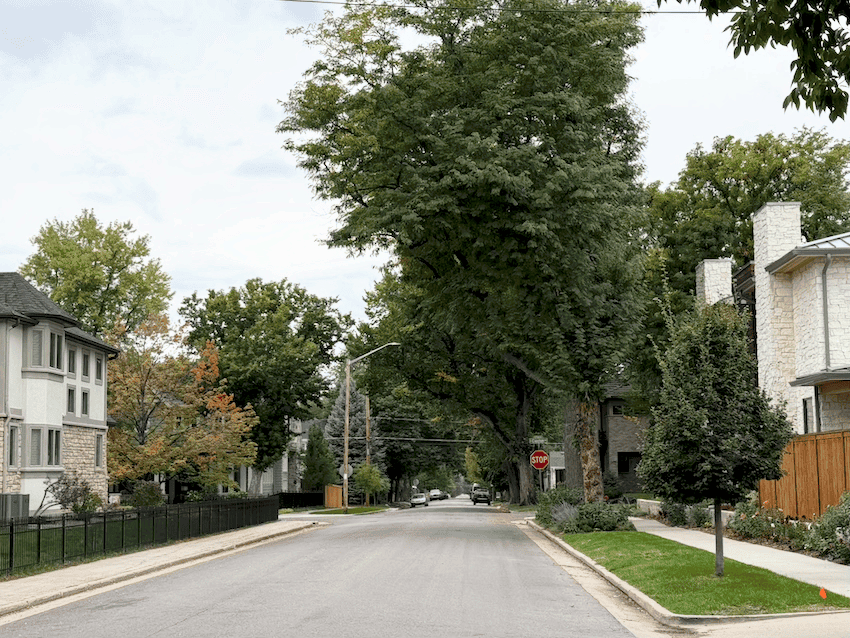
If you ask ten people in Denver where University Park is, you might get ten slightly different answers. Here's how I define it: University Blvd to the west, Colorado Blvd to the east, Yale Ave to the south, and I-25 to the north. It's a small footprint, but it packs in a lot of character.
5280 Magazine put University Park at #20 on its 2026 list of Denver's best neighborhoods, with strong marks for safety and the kind of extras that don't show up in a listing, like parks, transit, and walkability. About 8,400 people call it home, and the average sale price landed near $1.64 million in 2025 after climbing steadily for a few years before leveling off, a pattern that lines up with what our own market data shows for the neighborhood right now.
A Neighborhood Built Around a University
University Park exists because of the University of Denver, and you can still feel that today. DU started downtown in 1864 as Colorado Seminary, founded by John Evans and a group of Denver citizens. The school didn't take the name University of Denver until 1890, around the same time it moved out to the land that would become this neighborhood. The subdivision itself was platted in 1892, so the neighborhood and the university essentially grew up together.
A lot of the streets, lot sizes, and even the mature tree canopy trace back to that original plan. The neighborhood was laid out with wide streets and room for shade trees from the start, and walking through today you can still see that intention in how the blocks feel.
In April 2024, Denver City Council approved a Historic District designation for University Park, covering roughly 19 properties that tell the story of the neighborhood, from its early Methodist church ties to homes connected to DU's founding families. It's Denver's second discontiguous historic district, meaning the protected properties aren't all clustered together, they're spread through the neighborhood, which fits a place that grew organically around a campus rather than as a single planned development.
Worth knowing: University Park's Historic District, approved in 2024, is Denver's second discontiguous historic district. Its protected homes are scattered through the neighborhood rather than clustered on one block, so the history here isn't confined to a single postcard street.
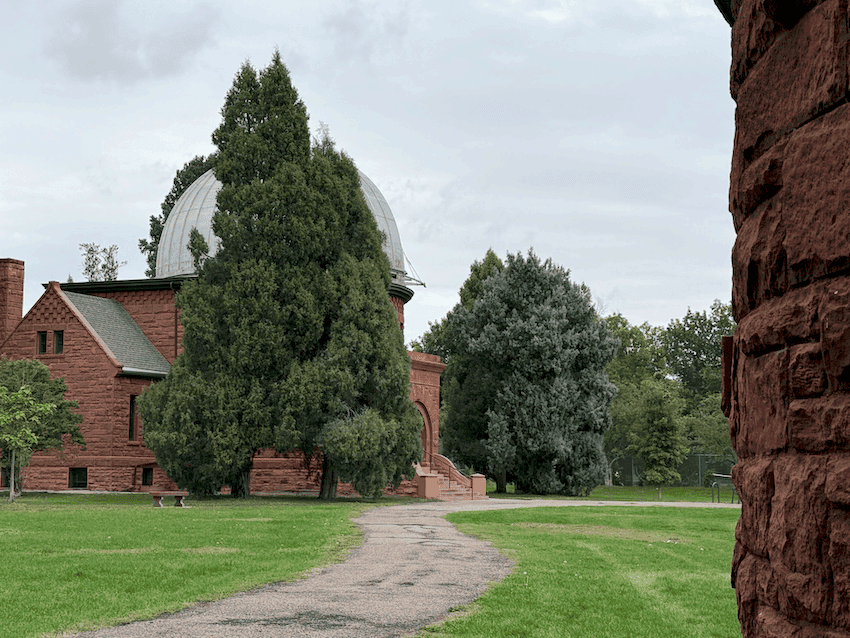
If you want one building that captures the neighborhood's roots, look at the Chamberlin Observatory. Funding started in 1883, construction began in 1888, and it was finished in 1891, making it one of the oldest structures connected to DU and still an active observatory today.
Schools Families Actually Choose
University Park Elementary sits right in the neighborhood at 2300 South St. Paul Street, and it consistently ranks in the top tier of Colorado elementary schools. Families who don't get assigned there sometimes still want in, and it's easy to see why once you look at the numbers.
Slavens K-8, less than a mile away, is another draw, also ranking among the best in the state. Having two strong schools within walking distance of each other is part of why University Park pulls in as many young families as it does.
Observatory Park and the Green Space Around It
The neighborhood's namesake park is worth a visit even if you don't live nearby. Observatory Park has open fields for soccer, lacrosse, and pickup games, tennis courts, a playground, and enough mature trees to make it feel like a proper escape rather than just a city block of grass. The Denver Astronomical Society runs public viewing nights at the observatory on Tuesday and Thursday evenings, plus monthly star parties on the south lawn for anyone who doesn't snag a reservation. The telescope itself, a 20-inch refractor that was originally displayed at the 1893 Chicago World's Fair, recently marked the observatory's 130th year in the neighborhood.
For a different kind of green space, Harvard Gulch Trail cuts along the edge of the neighborhood and connects to Robert H. McWilliams Park, which most residents just call Dinosaur Park thanks to the purple dinosaur in the playground. It's a nice option if you're looking for a walking or biking route rather than a place to sit.
The Food Scene Has Caught Up
For a long time, if you wanted a good meal you'd walk over to University or University Hills. That's changed. University Boulevard now has Two Hands for Korean-style corn dogs, Beau Jo's brought its Colorado-style pizza back to Denver with a location in the neighborhood, and you can find ramen at Tatsu Izakaya, wings at Saucy's Southern BBQ & Cuisine, and street tacos at Tacos El Metate. It's a small stretch, but it covers a lot of ground.
Living Next to a College Campus
Being this close to DU changes daily life in small, useful ways. The light rail station at DU opened in 2006, bringing back a version of the streetcar access the neighborhood had a century earlier, before those lines were torn up in the 1940s and 50s. That gives residents an easy ride downtown without needing to drive.
DU's campus also means there's always something going on nearby, Pioneers hockey games at Magness Arena, concerts and lectures through the university, and a rotating set of coffee shops and casual restaurants that cater to students and neighbors alike. It gives University Park an energy that a lot of purely residential neighborhoods don't have, without losing the quiet, tree-lined streets that make it feel like a neighborhood rather than a campus overflow.
A Different Kind of Coaching
I spent close to fifty years around Colorado theatre and about twenty years coaching gymnastics, and both taught me the same thing I bring to real estate now: you can't control what happens, only how you respond to it. A gymnast doesn't control the routine going sideways mid-air. An actor doesn't control a missed cue from a scene partner. What both of them control is the preparation that got them ready to handle it calmly when it happens.
Buying or selling a home in a neighborhood like University Park works the same way. You can't control whether the market tightens or loosens, whether a bidding war shows up on the house you want, or how long your own home sits before the right buyer finds it. What you can control is walking in prepared, knowing what the numbers actually say instead of guessing, so you can respond with confidence instead of nerves. That's the point of a report like this one. Not to predict what happens next, but to make sure you're not finding out blind.
The Short Version
University Park works because it was never trying to be one thing. It's a historic neighborhood with real architecture to back that up, a couple of the state's best public schools, a genuinely great park, and a university on its doorstep that keeps things a little more interesting than the average residential pocket of Denver. That combination is rare this close to the city center, and it's a big part of why the neighborhood has stayed in demand for well over a century.
If you're curious what's actually happening in University Park's housing market right now, I track it closely. DM me the word Micro on Instagram (@briantrampler_savoyardbrian) and I'll send you a free snapshot, no pressure, just real information.
Brian Trampler is a Denver native and Broker Associate with Corcoran Perry & Co. He holds the Pricing Strategy Advisor (PSA) designation and helps buyers and sellers work through real decisions across the Denver metro and Front Range.

Before real estate, Brian spent over 20 years in IT product management and product marketing, work built on solving real problems with clear information. He brings that same approach to real estate: straight answers, no sales pitch, and a willingness to walk through the details most agents skip.
Have a question about your own situation? Send Brian a message, call 303.638.1633, or email btrampler@corcoranperry.com.
#PerformYourMove









Socials